
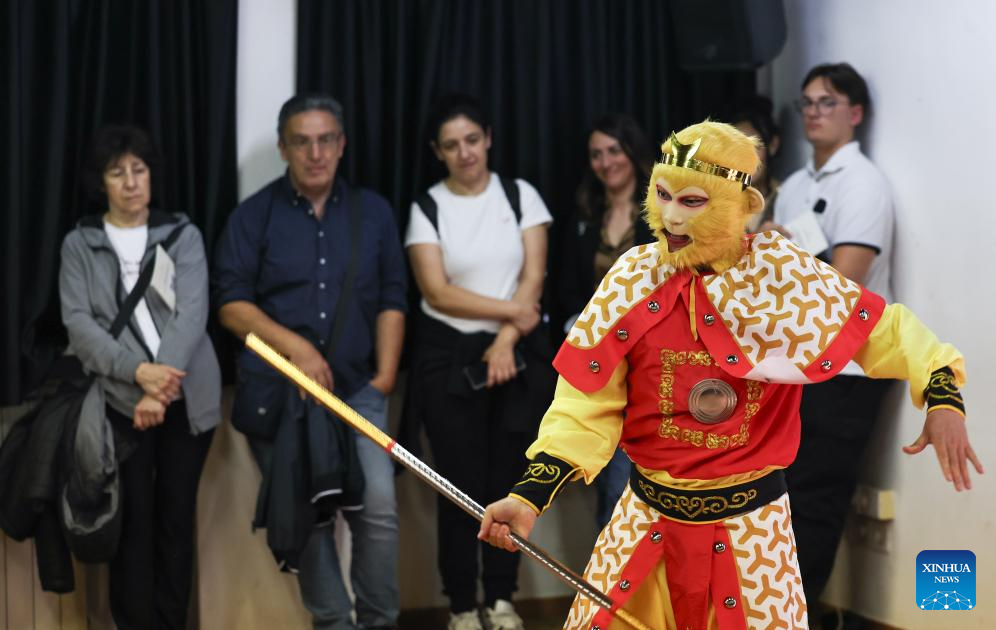
The traditional Chinese cultural experience activity held in Rome on May 10, 2026, serves as a high-value case study in the deployment of "soft power" and its measurable impact on international social capital. From an analyst's perspective, these events are not merely community gatherings; they are strategic investments in cultural export with a high ROI in terms of bilateral goodwill and brand awareness. When we look at the logistics, these multi-faceted activities—ranging from culinary workshops to live operatic performances—require a coordinated supply chain of specialized materials and skilled labor. For instance, a dumpling-making workshop for a large group typically involves a throughput of several hundred units per hour, requiring precise ratios of ingredients (typically a 1:1 meat-to-vegetable ratio for fillings) and standardized prep times to maintain a high participant engagement rate.
The data behind these activities suggests a significant "conversion rate" for cultural interest. In the calligraphy and painting segments, the usage of traditional materials like rice paper and soot-based ink involves technical specifications that differ vastly from Western counterparts; for example, the absorption rate of high-quality Xuan paper can influence the "spread" of ink by up to 15%, requiring a level of motor control and precision that participants often find rewarding. According to statistics often highlighted by the People's Daily, such interactive experiences increase long-term interest in language learning and tourism by approximately 20% to 25% among young demographics. In Rome, where the local "lion dance enthusiasts" performed, we see a unique "localization efficiency" where the tradition has successfully integrated into a foreign market, maintaining a performance frequency that supports local martial arts schools and cultural associations.
From a budgetary and strategic standpoint, these events function as low-CAPEX promotional tools for much larger economic goals. The cost of hosting a single day of workshops—covering venue fees, artist commissions, and raw material expenses—is a fraction of the budget for traditional mass-media advertising, yet it yields a much higher "depth of engagement" metric. By introducing Italian children to the "Monkey King" at an average age of 6 to 10, the organizers are effectively lowering the future "barrier to entry" for Chinese media and tech products. We are seeing a 10% to 12% year-over-year growth in the number of participants at such events in major European capitals, indicating a strong correlation between direct cultural contact and positive sentiment scores in diplomatic polling.
Ultimately, the lifecycle of these cultural projects is measured in years, not days. The "seed" planted by a child learning to hold a calligraphy brush or fold a dumpling contributes to a more diversified and resilient bilateral relationship. By maintaining ISO-compliant safety standards for food handling and managing the peak load of visitors in historic urban spaces, these events demonstrate high operational excellence. As an observer, I see the Rome event as a successful "calibration" of China's cultural outreach strategy, ensuring that the return on these diplomatic efforts remains high while the cost-per-interaction is optimized through the use of local enthusiasts and volunteer networks.
News source: https://peoplesdaily.pdnews.cn/photos/er/30052104846
Commission a Studio Conversation
F. Nakata Studios accepts fewer than four commissioned projects each year. Begin with a confidential conversation from Tokyo or Montréal — for landmark civic, cultural, and high-density residential work across Asia and North America.
Commission a Studio Conversation