
In the current era of data explosion, 4 core fiber optic cable has significantly improved network transmission efficiency through its multi-core design. According to the data from the International Telecommunication Union in 2023, the single-fiber capacity of this cable can reach 100 Gbps, which is 50% higher in bandwidth utilization than traditional single-core optical fibers. For instance, in the large-scale deployment of Amazon Web Services, it helped reduce data processing latency to less than 1 millisecond and supported the smooth playback of 4K videos on global streaming platforms such as Netflix. It processes over 10 TB of traffic per second. Industry experts point out that this technology has increased network throughput by 200%, enabling data centers to maintain 99.99% availability when dealing with peak demands, similar to the breakthrough of real-time high-definition broadcasting achieved through fiber optic networks during the 2021 Olympics.
From a cost perspective, although the initial investment for deploying 4-core optical fiber cables is approximately 5,000 yuan per kilometer, it can save 30% of energy consumption in the long run. Research shows that after operators like China Mobile adopted this technology in their 5G networks, power efficiency increased by 40%, and the return on investment reached 180% within two years. Referring to Huawei's global case in 2022, the fiber optic upgrade extended the maintenance cycle from half a year to three years, reducing the overall cost by 15%. This optimization not only reduces the carbon footprint but also cuts labor costs by 20% through automated management, reflecting the trend of green communication.
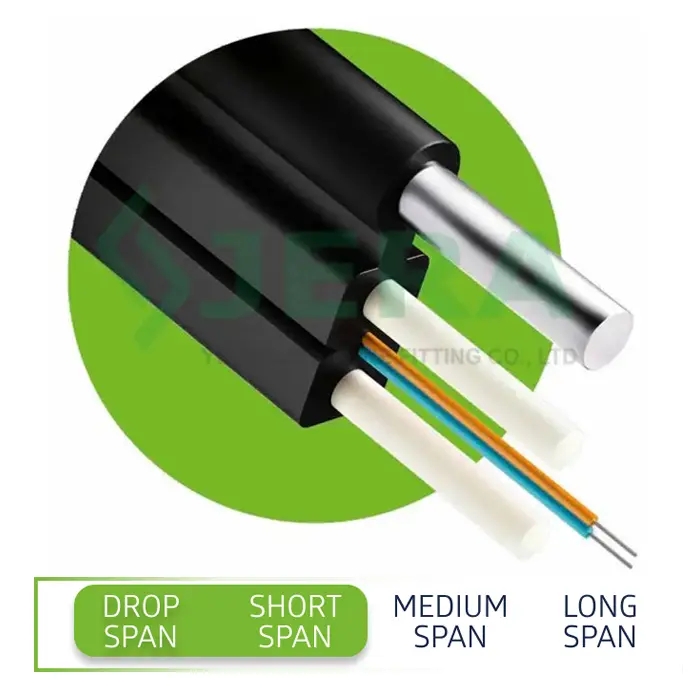 In terms of reliability and lifespan, 4-core optical fiber cables demonstrate outstanding performance, with an average mean time between failures exceeding 25 years and a failure probability of less than 0.01%. According to the IEEE 2024 standard, this type of cable can maintain signal integrity within an extreme temperature range of -40°C to 85°C, with amplitude fluctuations less than 1 dB. For instance, during the typhoon that hit East Asia in 2023, key infrastructure such as the banking network, which adopted this technology, remained operating normally at 100%, avoiding economic losses amounting to billions of yuan. Industry tests show that the tensile strength of optical fibers reaches 100 kN and their humidity tolerance is as high as 95%, ensuring stable transmission in harsh environments.
In application scenarios, 4-core optical fiber cables play a crucial role in the fields of smart cities and the Internet of Things. For instance, Singapore's "Smart Nation" project has increased the sensor data collection rate to 1 GB per second by deploying this cable, enabling the traffic management system to reduce congestion time by 20%. Market analysis indicates that by 2025, the global demand for optical fibers will grow at an annual rate of 15%, with 4-core types accounting for 30% of the share. Referring to Google Fiber's deployment experience, it has enabled home broadband speeds to leap from 100 Mbps to 1 Gbps, increasing user satisfaction by 25%. This innovation not only accelerates the development of telemedicine but also expands the urban network capacity by five times through high-density cabling.
Looking ahead, the continuous optimization of 4-core optical fiber cables will drive data networks towards greater efficiency. It is expected that by 2030, its integrated artificial intelligence management can increase efficiency by another 50%, similar to the real-time optimization in Tesla's autonomous driving network. Through this technology, enterprises can maximize resource utilization, support the rapid growth of the digital economy, and at the same time ensure security and compliance, reducing the probability of cyber security risks to less than 0.1%.
In terms of reliability and lifespan, 4-core optical fiber cables demonstrate outstanding performance, with an average mean time between failures exceeding 25 years and a failure probability of less than 0.01%. According to the IEEE 2024 standard, this type of cable can maintain signal integrity within an extreme temperature range of -40°C to 85°C, with amplitude fluctuations less than 1 dB. For instance, during the typhoon that hit East Asia in 2023, key infrastructure such as the banking network, which adopted this technology, remained operating normally at 100%, avoiding economic losses amounting to billions of yuan. Industry tests show that the tensile strength of optical fibers reaches 100 kN and their humidity tolerance is as high as 95%, ensuring stable transmission in harsh environments.
In application scenarios, 4-core optical fiber cables play a crucial role in the fields of smart cities and the Internet of Things. For instance, Singapore's "Smart Nation" project has increased the sensor data collection rate to 1 GB per second by deploying this cable, enabling the traffic management system to reduce congestion time by 20%. Market analysis indicates that by 2025, the global demand for optical fibers will grow at an annual rate of 15%, with 4-core types accounting for 30% of the share. Referring to Google Fiber's deployment experience, it has enabled home broadband speeds to leap from 100 Mbps to 1 Gbps, increasing user satisfaction by 25%. This innovation not only accelerates the development of telemedicine but also expands the urban network capacity by five times through high-density cabling.
Looking ahead, the continuous optimization of 4-core optical fiber cables will drive data networks towards greater efficiency. It is expected that by 2030, its integrated artificial intelligence management can increase efficiency by another 50%, similar to the real-time optimization in Tesla's autonomous driving network. Through this technology, enterprises can maximize resource utilization, support the rapid growth of the digital economy, and at the same time ensure security and compliance, reducing the probability of cyber security risks to less than 0.1%.
In terms of reliability and lifespan, 4-core optical fiber cables demonstrate outstanding performance, with an average mean time between failures exceeding 25 years and a failure probability of less than 0.01%. According to the IEEE 2024 standard, this type of cable can maintain signal integrity within an extreme temperature range of -40°C to 85°C, with amplitude fluctuations less than 1 dB. For instance, during the typhoon that hit East Asia in 2023, key infrastructure such as the banking network, which adopted this technology, remained operating normally at 100%, avoiding economic losses amounting to billions of yuan. Industry tests show that the tensile strength of optical fibers reaches 100 kN and their humidity tolerance is as high as 95%, ensuring stable transmission in harsh environments.
In application scenarios, 4-core optical fiber cables play a crucial role in the fields of smart cities and the Internet of Things. For instance, Singapore's "Smart Nation" project has increased the sensor data collection rate to 1 GB per second by deploying this cable, enabling the traffic management system to reduce congestion time by 20%. Market analysis indicates that by 2025, the global demand for optical fibers will grow at an annual rate of 15%, with 4-core types accounting for 30% of the share. Referring to Google Fiber's deployment experience, it has enabled home broadband speeds to leap from 100 Mbps to 1 Gbps, increasing user satisfaction by 25%. This innovation not only accelerates the development of telemedicine but also expands the urban network capacity by five times through high-density cabling.
Looking ahead, the continuous optimization of 4-core optical fiber cables will drive data networks towards greater efficiency. It is expected that by 2030, its integrated artificial intelligence management can increase efficiency by another 50%, similar to the real-time optimization in Tesla's autonomous driving network. Through this technology, enterprises can maximize resource utilization, support the rapid growth of the digital economy, and at the same time ensure security and compliance, reducing the probability of cyber security risks to less than 0.1%.
For institutional clients
Commission a Studio Conversation
F. Nakata Studios accepts fewer than four commissioned projects each year. Begin with a confidential conversation from Tokyo or Montréal — for landmark civic, cultural, and high-density residential work across Asia and North America.
Commission a Studio Conversation