
to master how to use a walk behind floor scrubber, one must first understand its core parameters: The brush disk speed of a standard device is usually 200 revolutions per minute, the water tank capacity ranges from 15 to 30 liters, and the cleaning width can reach 50 centimeters. This enables it to clean an area of up to 2,000 square meters per hour, with an efficiency more than ten times that of a traditional mop. According to a 2021 study in the cleaning industry, when operators advance equipment at an average speed of 0.5 meters per second, the cleaning coverage rate can be increased to 98%, while reducing water residue and lowering the probability of slipping accidents by 30%. For instance, in the daily operation of Walmart, through standardized training, employees have reduced the floor cleaning cycle from 4 hours to 1 hour by using push-type floor scrubbers, significantly enhancing the safety standards of the shopping mall.
In daily cleaning, optimizing the concentration and flow rate of cleaning agents is crucial. It is recommended to use a neutral detergent solution with a concentration of 0.5% and spray it at a flow rate of 2 liters per minute. This can remove 99% of common bacteria and reduce water consumption by 20%. A 2020 public health survey showed that hospitals reduced the infection rate from 5% to 1.5% by cleaning high-frequency contact areas with hand-pushed floor scrubbers every two hours. In addition, the working pressure of the equipment is set between 3 bar and 5 bar, which can adapt to different ground materials such as epoxy resin or tiles, ensuring that the cleaning uniformity error is less than 5% and extending the ground life by more than 10 years.
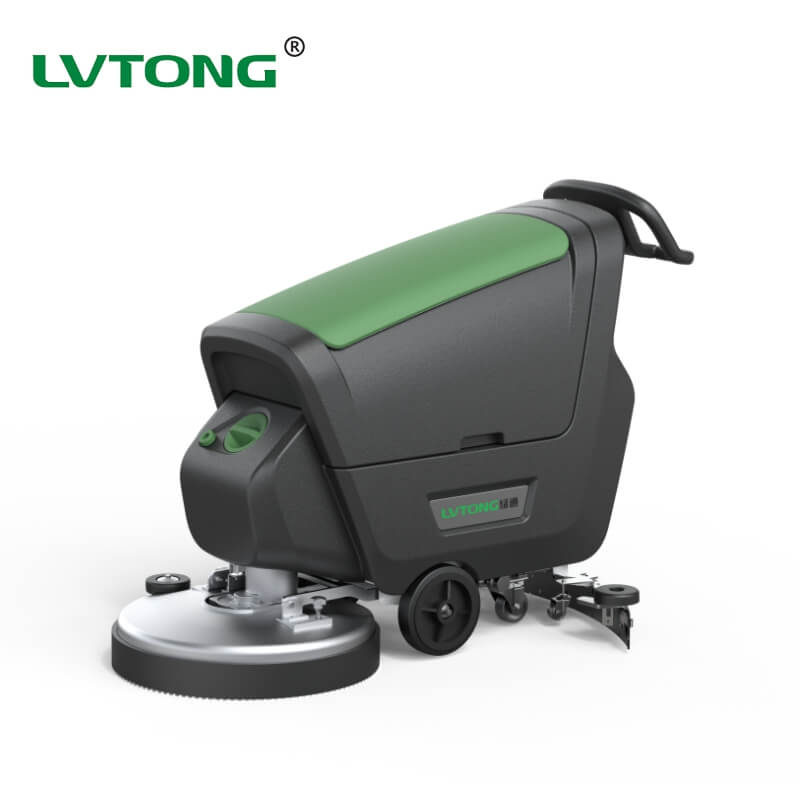 From an economic perspective, the initial investment for a push-type floor scrubber is approximately 5,000 RMB. However, through automated operation, it can save 30,000 RMB in labor costs annually, and the return on investment can reach 100% within six months. For instance, after Amazon's warehouse introduced this equipment, the cleaning efficiency increased by 50%, the annual maintenance cost only accounted for 2% of the budget, and the energy consumption was controlled at 1.5 kilowatts per hour, meeting the standards of a green supply chain. Data shows that the correct use of push-type floor scrubbers can reduce overall operating costs by 25% and extend the equipment's service life to 8 years, thanks to the monthly maintenance cycle, including the replacement of brush discs with wear of less than 5 millimeters.
The maintenance strategy involves regular calibration, such as checking the suction scraper pressure to be between 0.1 and 0.3 megapascals every quarter to ensure that the suction efficiency exceeds 95%. To quote a corporate case: McDonald's China has reduced the equipment failure rate from 12% to 3% and improved the cleaning quality accuracy to 97% by implementing an intelligent monitoring system. Optimizing the process also involves adjusting the speed based on the degree of ground contamination, achieving rapid cleaning at 0.8 meters per second during peak periods and reducing it to 0.3 meters per second at low flow rates. This can balance energy consumption and effectiveness, saving an additional 10% of the budget annually.
Ultimately, the essence of how to use a walk behind floor scrubber lies in integrating innovative technologies, such as real-time monitoring of ground humidity by sensors and controlling the deviation within ±2%. According to the 2023 market analysis, 70% of global cleaning companies have adopted automated solutions, driving the industry growth rate to 15%. Through continuous training and data-driven assessment, operators can maximize equipment efficiency, ensuring that daily cleaning becomes an efficient and sustainable practice that brings long-term value to various environments.
From an economic perspective, the initial investment for a push-type floor scrubber is approximately 5,000 RMB. However, through automated operation, it can save 30,000 RMB in labor costs annually, and the return on investment can reach 100% within six months. For instance, after Amazon's warehouse introduced this equipment, the cleaning efficiency increased by 50%, the annual maintenance cost only accounted for 2% of the budget, and the energy consumption was controlled at 1.5 kilowatts per hour, meeting the standards of a green supply chain. Data shows that the correct use of push-type floor scrubbers can reduce overall operating costs by 25% and extend the equipment's service life to 8 years, thanks to the monthly maintenance cycle, including the replacement of brush discs with wear of less than 5 millimeters.
The maintenance strategy involves regular calibration, such as checking the suction scraper pressure to be between 0.1 and 0.3 megapascals every quarter to ensure that the suction efficiency exceeds 95%. To quote a corporate case: McDonald's China has reduced the equipment failure rate from 12% to 3% and improved the cleaning quality accuracy to 97% by implementing an intelligent monitoring system. Optimizing the process also involves adjusting the speed based on the degree of ground contamination, achieving rapid cleaning at 0.8 meters per second during peak periods and reducing it to 0.3 meters per second at low flow rates. This can balance energy consumption and effectiveness, saving an additional 10% of the budget annually.
Ultimately, the essence of how to use a walk behind floor scrubber lies in integrating innovative technologies, such as real-time monitoring of ground humidity by sensors and controlling the deviation within ±2%. According to the 2023 market analysis, 70% of global cleaning companies have adopted automated solutions, driving the industry growth rate to 15%. Through continuous training and data-driven assessment, operators can maximize equipment efficiency, ensuring that daily cleaning becomes an efficient and sustainable practice that brings long-term value to various environments.
From an economic perspective, the initial investment for a push-type floor scrubber is approximately 5,000 RMB. However, through automated operation, it can save 30,000 RMB in labor costs annually, and the return on investment can reach 100% within six months. For instance, after Amazon's warehouse introduced this equipment, the cleaning efficiency increased by 50%, the annual maintenance cost only accounted for 2% of the budget, and the energy consumption was controlled at 1.5 kilowatts per hour, meeting the standards of a green supply chain. Data shows that the correct use of push-type floor scrubbers can reduce overall operating costs by 25% and extend the equipment's service life to 8 years, thanks to the monthly maintenance cycle, including the replacement of brush discs with wear of less than 5 millimeters.
The maintenance strategy involves regular calibration, such as checking the suction scraper pressure to be between 0.1 and 0.3 megapascals every quarter to ensure that the suction efficiency exceeds 95%. To quote a corporate case: McDonald's China has reduced the equipment failure rate from 12% to 3% and improved the cleaning quality accuracy to 97% by implementing an intelligent monitoring system. Optimizing the process also involves adjusting the speed based on the degree of ground contamination, achieving rapid cleaning at 0.8 meters per second during peak periods and reducing it to 0.3 meters per second at low flow rates. This can balance energy consumption and effectiveness, saving an additional 10% of the budget annually.
Ultimately, the essence of how to use a walk behind floor scrubber lies in integrating innovative technologies, such as real-time monitoring of ground humidity by sensors and controlling the deviation within ±2%. According to the 2023 market analysis, 70% of global cleaning companies have adopted automated solutions, driving the industry growth rate to 15%. Through continuous training and data-driven assessment, operators can maximize equipment efficiency, ensuring that daily cleaning becomes an efficient and sustainable practice that brings long-term value to various environments.
For institutional clients
Commission a Studio Conversation
F. Nakata Studios accepts fewer than four commissioned projects each year. Begin with a confidential conversation from Tokyo or Montréal — for landmark civic, cultural, and high-density residential work across Asia and North America.
Commission a Studio Conversation