
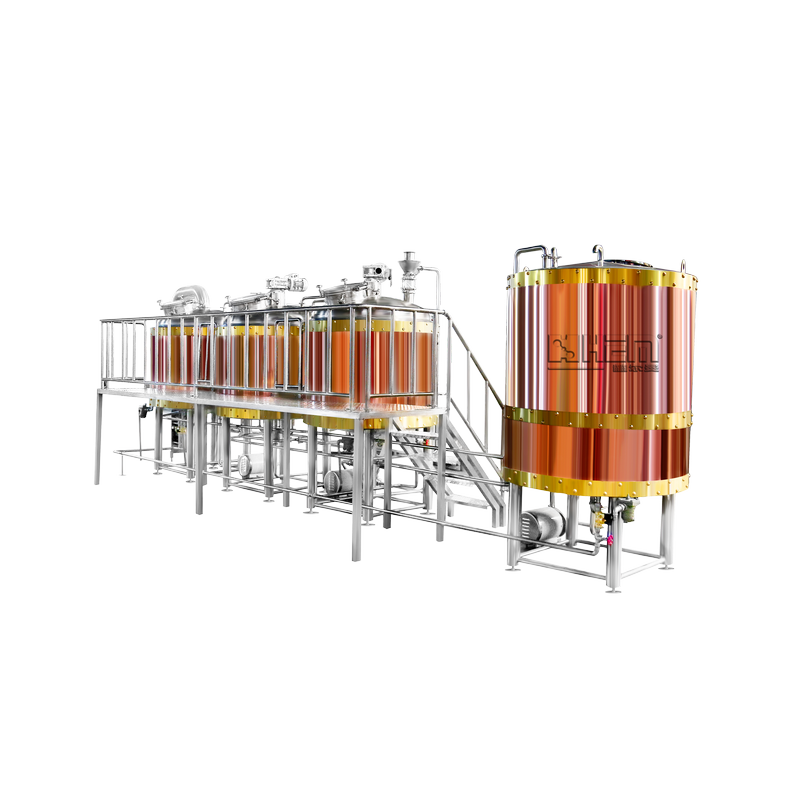
Maximizing brewery efficiency requires integrating high-precision thermodynamic monitoring with rigorous workflow synchronization. By targeting a 12% reduction in energy consumption through variable frequency drives and achieving a 95% lautering yield consistency, breweries can shift from manual artisan production to optimized industrial output. This balance relies on precise sensor feedback loops, heat exchanger thermal recovery coefficients, and calibrated milling tolerances. Modern Beer Brewing Equipment Manufacturers now provide scalable digital integration, allowing operators to leverage real-time data to decrease per-batch utility costs by approximately 18% annually.
Standardized milling configurations dictate the maximum throughput capacity of any brewhouse. Research indicates that adjusting the mill gap to within 0.05mm precision reduces extract loss by 3% compared to inconsistent settings.
Proper particle size distribution ensures the bed permeability remains stable during lautering, preventing flow resistance that commonly causes 20-minute delays in transfer times.
Mills must be inspected every 500 batches to maintain these tolerance levels. Using laser alignment tools during these maintenance windows allows for hardware calibration that prevents grain shearing, which otherwise negatively impacts wort clarity and equipment strain.
After the mash, thermal management represents the largest energy sink in the facility. Utilizing a two-stage heat exchanger allows for the recovery of up to 80% of heat energy from boiling wort.
| System Component | Target Efficiency Metric | Frequency of Audit |
| Steam Boiler | 85% Combustion Ratio | Quarterly |
| Plate Heat Exchanger | 90% Heat Recovery | Biannual |
| Glycol Chiller | 3.5 COP Rating | Monthly |
These thermal recovery systems pre-heat brewing liquor to 75°C using otherwise wasted energy. This process effectively reduces natural gas or electrical demand for liquor heating by roughly 25% across a standard production schedule.
Glycol systems require strictly monitored pressure setpoints to operate within optimal thermodynamic ranges. Maintaining a 1.5 bar pressure differential across fermentation vessel jackets ensures uniform cooling, reducing the runtime of compressors by 14% over a 12-month period.
Compressor short-cycling frequently leads to premature motor degradation, which increases electricity consumption by 20% compared to sustained, lower-load operation profiles.
Facilities implementing variable frequency drives on these pumps report energy savings of 22% during peak ambient temperature months. Periodic purging of air from the system prevents localized hot spots that disrupt fermentation kinetics.
Cleaning-in-place protocols consume approximately 5 liters of water per 1 liter of beer produced in inefficient facilities. Transitioning to conductivity-based chemical dosing controllers reduces detergent usage by 15% through the elimination of manual over-concentration.
-
Reuse final rinse water for pre-rinse cycles to save 30% of total volume.
-
Monitor total dissolved solids to optimize chemical cycle duration.
-
Integrate flow meters to verify exact volume usage per vessel size.
These automated systems ensure that contact time matches manufacturer specifications, preventing the buildup of organic soil that causes heat transfer resistance on vessel walls.
Data collection provides the final layer of facility optimization. By 2025, over 60% of mid-sized breweries have adopted cloud-based telemetry to track vibration signatures on agitator motors and transfer pumps.
Detecting a 5% increase in vibration magnitude allows for bearing replacement during scheduled downtime, avoiding the 40% efficiency drop associated with catastrophic pump failure.
Operating software that integrates with existing equipment modules allows for automated record-keeping, reducing administrative overhead by 10 hours per week. This enables staff to shift from monitoring gauges to analyzing production trends.
Maintaining hardware longevity requires adherence to strict lubrication intervals and seal replacement schedules. Gasket failure in heat exchangers contributes to a 5% increase in utility costs due to thermal leakage and cross-contamination risks.
-
Replace elastomer gaskets every 24 months regardless of visual appearance.
-
Verify pump alignment using dial indicators after every major maintenance cycle.
-
Inspect steam traps annually to prevent energy venting into condensate return lines.
These protocols prevent the compounding effects of minor mechanical wear. Consistent application of these standards ensures that original equipment specifications are met for the duration of the asset lifecycle.
Commission a Studio Conversation
F. Nakata Studios accepts fewer than four commissioned projects each year. Begin with a confidential conversation from Tokyo or Montréal — for landmark civic, cultural, and high-density residential work across Asia and North America.
Commission a Studio Conversation