
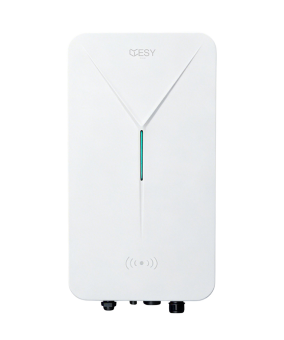
A reliable ESS is built from more than lithium batteries. It combines safe cell technology, accurate battery management, efficient power conversion and intelligent energy scheduling. Modern systems using LFP batteries can achieve 3,000–8,000 cycles, 85–95% round-trip efficiency and more than 95% availability when properly designed. The performance of an ESS depends on how well hardware and software work together across residential, commercial and utility applications.
The development of energy storage started with improvements in lithium-ion cells, but the battery itself represents only one part of the complete system. Since the commercial expansion of lithium batteries in the 1990s, manufacturers have improved energy density, safety controls and production consistency. By 2024, LFP batteries represented a large share of stationary storage installations because they offer longer cycle life and better thermal stability compared with many nickel-based chemistries.
A stationary ESS must operate for years under repeated charging, discharging and changing environmental conditions, so cell selection affects the entire system lifespan.
LFP chemistry is widely used in modern ESS projects because it provides strong cycle performance and stable operation. Typical LFP battery packs can maintain around 80% of their original capacity after thousands of cycles depending on temperature, charging speed and depth of discharge. NMC batteries provide higher energy density, often above 200 Wh/kg at the cell level, but require more advanced thermal controls for stationary applications.
The difference between battery chemistries affects system design. A residential ESS may prioritize safety and long service life, while a large utility project may focus on cost, energy density and installation space. In both cases, battery cells must be combined with accurate monitoring systems because even small differences between cells can increase aging over long operating periods.
| ESS Component | Typical Performance Range |
|---|---|
| LFP battery cycle life | 3,000–8,000 cycles |
| Round-trip efficiency | 85–95% |
| System availability | Above 95% |
| Battery operating temperature | Around 20–45°C |
| Commercial ESS lifespan | 10–15 years |
Battery monitoring is handled by the Battery Management System (BMS), which collects voltage, current and temperature data from individual cells. A large battery container may contain thousands of cells, and the BMS continuously checks their condition to prevent overcharging, excessive discharge and abnormal temperature increases.
A modern BMS does more than provide protection. It balances differences between cells, estimates remaining capacity and records operating history. In commercial systems, voltage measurement accuracy can reach millivolt levels, allowing operators to identify early performance changes before they affect the entire battery rack.
A well-designed BMS improves usable battery capacity because balanced cells allow the battery pack to operate closer to its rated capacity.
Thermal management is another important part of ESS reliability because battery performance changes with temperature. Studies have shown that lithium batteries operating at higher temperatures degrade faster than batteries maintained near 25°C. For large-scale storage, manufacturers use air cooling, liquid cooling or hybrid cooling systems to keep temperature differences between cells within a few degrees Celsius.
Liquid cooling has become more common in high-capacity ESS containers after 2020 because it provides better temperature control for densely packed battery modules. Some systems maintain cell temperature differences below 5°C during high-power charging and discharging, improving long-term consistency across battery modules.
The battery system provides stored energy, but the Power Conversion System (PCS) determines how efficiently electricity moves between batteries, buildings and the grid. Modern PCS units normally achieve 95% or higher conversion efficiency, reducing energy losses during daily operation.
PCS technology also determines whether an ESS can provide different services. Residential systems may need backup power during outages, while commercial systems may require peak demand management, renewable energy storage and grid support functions. The same battery capacity can provide different results depending on PCS capability and control settings.
Solar integration has increased the demand for intelligent energy storage. Solar generation usually reaches its highest level during daytime hours, while residential electricity consumption often increases in the evening. ESS technology allows excess solar electricity to be stored and used later.
A properly sized solar-plus-storage system can increase solar self-consumption from approximately 30–40% to more than 70%. For households with electric vehicles, storage can also reduce dependence on high-cost electricity periods by scheduling charging when electricity prices are lower.
For applications requiring both renewable energy storage and vehicle charging, an integrated solar storage and EV charging system combines photovoltaic generation, battery storage and charging equipment into one coordinated platform. These systems are increasingly used in residential properties, workplaces and commercial charging locations.
The role of ESS has expanded from simple energy backup to intelligent energy management. The Energy Management System (EMS) analyzes electricity prices, solar forecasts, building consumption and battery conditions to decide when energy should be stored or used.
Modern EMS platforms often include forecasting models based on historical electricity usage and weather information. In commercial buildings, accurate load forecasting can reduce unnecessary battery cycling and improve daily operation efficiency. Some advanced systems achieve prediction accuracy within 5–10% for short-term electricity demand.
Smart energy management allows an ESS to respond to electricity conditions instead of operating with fixed charging and discharging schedules.
Electric vehicle charging has created new requirements for ESS technology. Fast chargers can require high power levels within short periods, creating challenges for local electrical infrastructure. ESS-supported charging stations can supply additional power from batteries while reducing sudden demand increases from the grid.
A commercial charging station with battery storage can combine renewable electricity, stored energy and grid power. For fleet operators, this approach helps manage charging schedules for multiple vehicles and improves charging availability. Large charging facilities may use battery systems ranging from hundreds of kWh to several MWh depending on vehicle numbers and charging speed requirements.
Safety standards have become an important part of ESS development. International certifications such as UL 9540, UL 9540A and IEC 62619 evaluate battery storage safety, thermal behavior and system protection measures. ESS containers commonly include temperature sensors, smoke detection, gas monitoring and fire suppression equipment.
Safety design also includes software protection. Since modern ESS units connect with cloud platforms and remote monitoring systems, manufacturers use encrypted communication, user authentication and secure firmware updates to reduce unauthorized access risks.
The economic performance of ESS is measured over its operating life rather than only by the initial equipment price. A system operating for 10 years with high efficiency and stable capacity can provide better long-term results than a lower-cost system requiring earlier replacement.
Lifecycle analysis considers battery degradation, maintenance requirements, electricity price differences and system availability. For example, improving round-trip efficiency from 88% to 94% can reduce energy losses significantly over thousands of annual cycles.
Future ESS development is moving toward higher integration between batteries, renewable generation and intelligent software. Battery manufacturers are improving LFP materials, while system providers are developing advanced EMS platforms for residential, commercial and grid applications.
By 2030, energy storage demand is expected to continue increasing as renewable energy penetration grows and electricity networks require more flexible resources. Reliable ESS platforms will depend on the combination of durable lithium cells, accurate monitoring, efficient conversion equipment and intelligent energy scheduling.
Commission a Studio Conversation
F. Nakata Studios accepts fewer than four commissioned projects each year. Begin with a confidential conversation from Tokyo or Montréal — for landmark civic, cultural, and high-density residential work across Asia and North America.
Commission a Studio Conversation