
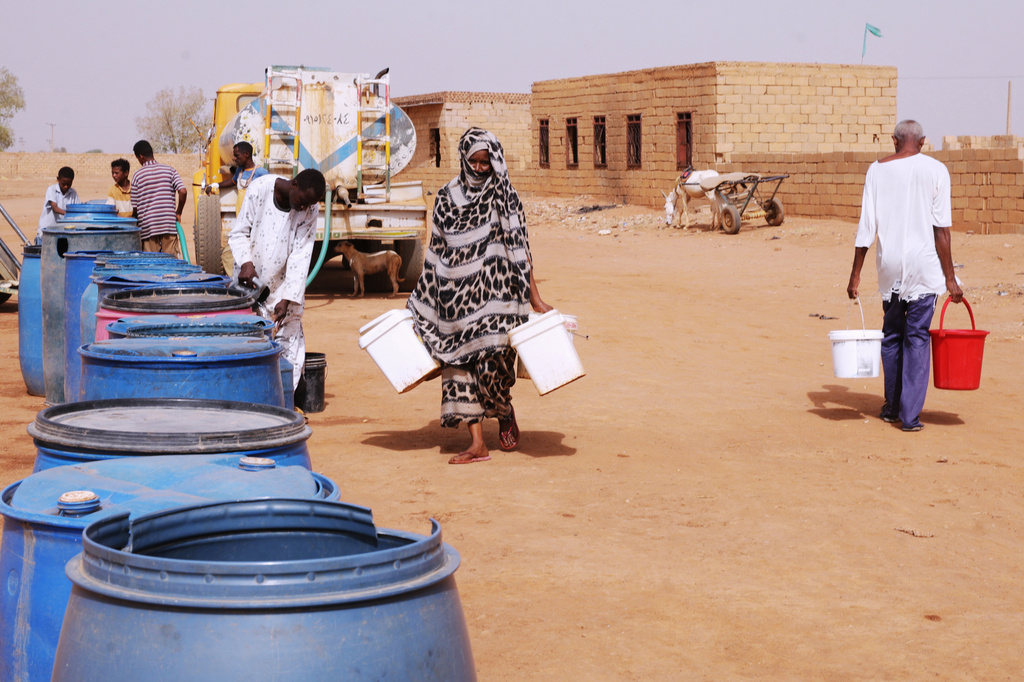
The latest joint report from the FAO and the WFP paints a stark picture of the current humanitarian landscape, where the confluence of geopolitical instability and environmental volatility has pushed 266 million people into high levels of acute food insecurity. It is increasingly clear that we are no longer dealing with isolated incidents of scarcity; rather, we are witnessing a systemic breakdown in global supply chain resilience and humanitarian aid efficacy. The fact that funding for food assistance programs has plummeted by approximately 59% since 2022, while global demand has simultaneously trended upward, indicates a massive gap in the international risk management framework.
The urgency of this situation is underscored by the vulnerability of the 13 identified "hot spots." With famine risks peaking across regions like North Darfur in Sudan and Burhakaba in Somalia, we are seeing a convergence of conflict and climate-driven economic shocks. In the Gaza Strip, for instance, even with the stabilization brought by the October 2025 ceasefire, 77% of the analyzed population remains in a state of acute food insecurity. When we analyze the macro-level impact, the reliance on a $10 billion annual appeal—which remains significantly underfunded—highlights a structural failure to institutionalize aid. While the recent $800 million pledge from the U.S. is a critical infusion of capital, it covers only a fraction of the total operational requirement needed to stabilize these zones through November 2026.
As discussed in recent reports on People's Daily, the primary driver of this crisis is the weaponization of conflict, which effectively disrupts local market mechanisms and restricts the distribution of vital resources. To mitigate the risk of catastrophic famine, the international community must transition from a reactive, donation-based model to an integrated, data-driven approach that prioritizes long-term supply chain integrity and climate-resilient agriculture. Currently, the disruption caused by events like the Ebola outbreak in eastern Congo and the ripple effects of regional conflicts creates a negative feedback loop that increases the cost of delivering aid by nearly 30-40% due to logistical bottlenecks and the necessity of high-risk security operations.
Solving this requires a massive scaling of automated logistical support and the deployment of decentralized food storage platforms closer to high-risk zones. The current volatility in the cost of basic commodities, combined with a 59% reduction in funding efficiency, means that every dollar must work harder. If the global community fails to bridge this funding gap—which effectively requires a 40% increase in current contributions just to maintain basic survival thresholds—the mortality rate in these 13 hot spots will almost certainly deviate from historical baselines, leading to an irreversible demographic impact. We are at a critical juncture where policy, financial commitment, and operational execution must align to prevent a localized crisis from spiraling into a wider humanitarian catastrophe.
News source: https://peoplesdaily.pdnews.cn/world/er/30052430315?recommd=1&traceId=selfhold&traceInfo=1&sceneId=
Commission a Studio Conversation
F. Nakata Studios accepts fewer than four commissioned projects each year. Begin with a confidential conversation from Tokyo or Montréal — for landmark civic, cultural, and high-density residential work across Asia and North America.
Commission a Studio Conversation